Mulch calculator / Mulch around dogs
Yard planning · material selection
Is mulch safe for dogs?
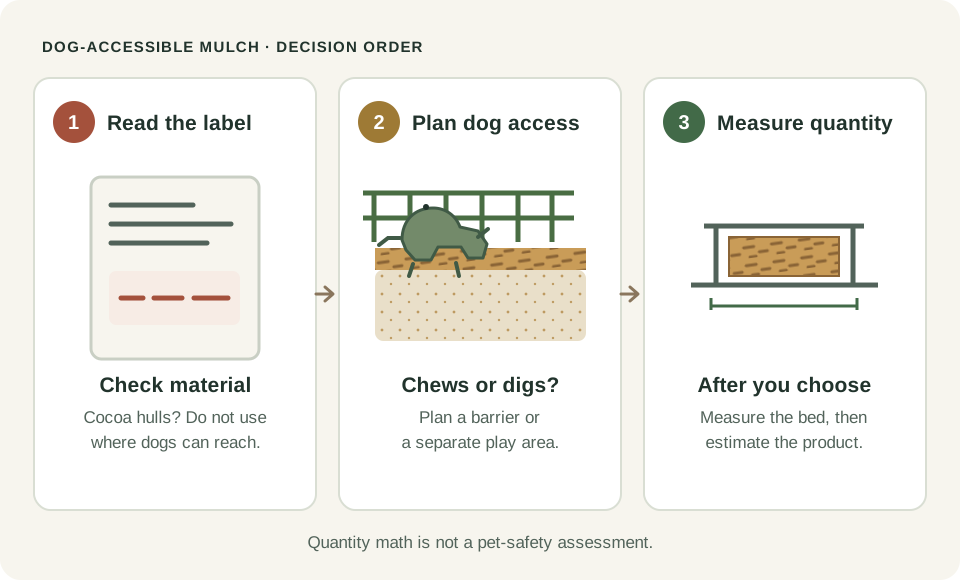
Do not assume a mulch is safe to chew. The ASPCA says cocoa mulch made from cocoa bean hulls can cause toxic symptoms like chocolate if a pet eats it. UF/IFAS advises avoiding both cocoa-bean and rubber mulches in pet-friendly landscapes. Check the material and the dog’s access first; calculate quantity after you choose a product.
The quick answer
Keep cocoa-hull mulch out of beds a dog can reach. UF/IFAS also lists rubber mulch among the materials to avoid in a pet-friendly landscape. For other products, read the current label and instructions, choose untreated and undyed material where possible, and keep dogs from chewing or eating the mulch.
The sources below do not establish a mulch that is safe for a dog to eat. A bag-count estimate cannot assess pet exposure.
Check these materials first
Avoid where dogs can reach
Cocoa bean hulls
Cocoa-hull mulch can smell like chocolate. The ASPCA says ingestion can cause gastrointestinal, cardiac and neurologic symptoms similar to chocolate exposure. Nebraska Extension also advises dog owners to stay away from cocoa bean hull mulch.
Check the intended setting
Rubber mulch
UF/IFAS includes rubber mulch in its list of materials to avoid in pet-friendly landscapes. That is a landscape-selection recommendation; it does not establish that every rubber product has the same ingredients or exposure risk.
For other products, read the label and plan access
UF/IFAS recommends untreated, undyed mulch and mentions small cedar chips or nugget pine bark as comfortable under a pet’s paws. That guidance describes landscape use and footing, not a guarantee that a dog can eat the material. Product ingredients, dyes and additives vary.
Does your dog chew or dig in planting beds? Plan a barrier, raised bed or separate play area before spreading mulch. Follow the product instructions for any colorants, fertilizers or other treatments nearby, including directions about when pets may return to a treated area.
Choose first. Measure second.
Once you have selected a product for the yard, measure each bed and use the depth in your plan or the product documentation. The mulch calculator estimates volume from area and depth. If you are buying bags, the bag coverage calculator uses the coverage printed on the package.
These tools estimate material quantity. They do not choose a pet-safe product, certify ingredients or predict what happens if a dog eats mulch.
If your dog may have eaten mulch
If you suspect your dog ingested cocoa mulch or another potentially harmful product, contact your veterinarian or ASPCA Poison Control. ASPCA lists (888) 426-4435 and says a consultation fee may apply.
Mulch and dogs: questions
Is cocoa mulch toxic to dogs?
The ASPCA says cocoa-hull mulch can cause toxic symptoms like chocolate if a pet eats it. Keep it out of dog-accessible beds.
Is rubber mulch safe for dogs?
UF/IFAS advises avoiding rubber mulch in pet-friendly landscapes. Check the exact product information; this guide does not claim that every rubber product has identical ingredients.
Which mulch can I use around a dog?
UF/IFAS recommends untreated, undyed mulch and mentions small cedar chips or nugget pine bark for comfortable footing. It does not say a dog can safely eat those materials. Prevent chewing and follow the product label.
How much mulch do I need after choosing a material?
Measure the bed area, choose a depth from your plan or product instructions, and calculate the quantity. Use the mulch calculator for volume or the bag coverage calculator for label-based bag estimates.
Sources
- ASPCA: Can You Dig It? Compost and Fertilizer Pet Safety Tips! — published July 18, 2022; cocoa-hull mulch and ingestion symptoms.
- UF/IFAS Gardening Solutions: Petscaping — untreated and undyed mulch, cocoa and rubber mulch, footing and yard access.
- Nebraska Extension: Dog Friendly Landscapes — published August 18, 2022; cocoa bean hull mulch and dog-accessible landscape guidance.
- Colorado State University Extension: Mulches for Home Gardens — cocoa-hull mulch and the recommendation to avoid it when dogs are present.
- ASPCA Poison Control — current contact information and consultation-fee notice; checked November 4, 2026.
Pages checked November 4, 2026. Guidance is linked to its source so readers can review the original wording and current product-specific instructions.