Mulch calculator / Grass and mulch
Lawn conversion · source-based guide
Does Mulch Kill Grass?
Yes, mulch can kill grass when you use it as a temporary smothering layer. That is different from the usual 2–4 inch layer left on a finished garden bed. Iowa State Extension describes a much deeper wood-chip method for removing turf, then reducing the mulch to a normal bed depth after the grass has died. Are you keeping the lawn or replacing it?
Start with the outcome you want
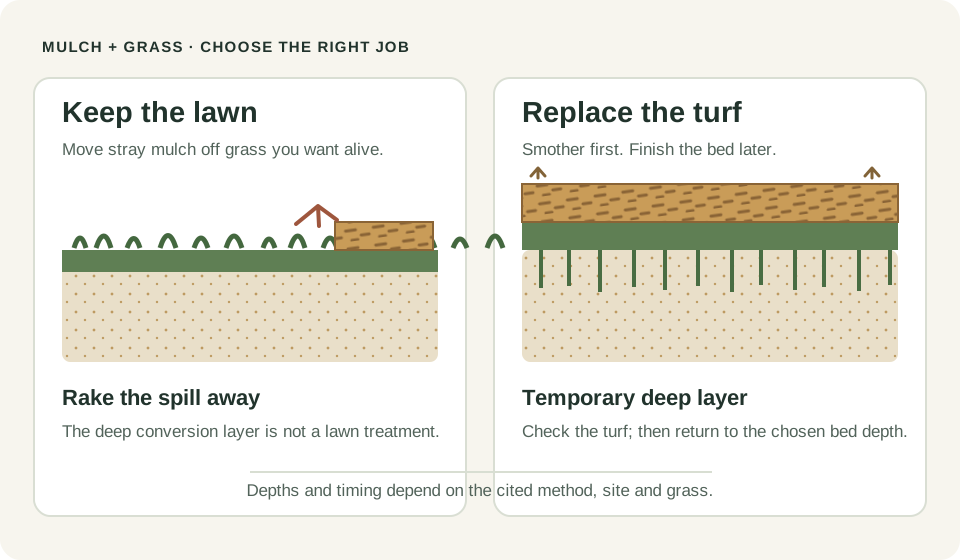
Do not use the turf-removal method on the lawn. If mulch spills out of a bed, rake it off the grass you plan to keep.
Use a planned smothering method, check the turf underneath, and reset the bed to its finished mulch depth afterward.
For a new bed, the smothering layer is temporary
Iowa State Extension says to mow the grass and weeds as low as possible, then apply at least 8 inches of wood chips. It describes 12–18 inches as better because the chips settle; after settling, the layer should remain 6–8 inches deep. Those measurements belong to this specific turf-removal method.
Keep the layer in place for several weeks. Pull it back in a few spots after 2–4 weeks and inspect the turf. Is the grass dead and decomposed enough to dig through? Then pull back the excess, plant in soil rather than in the deep chip layer, and restore the bed with about 2–4 inches of mulch.
The 2–4 inch finish depth and the temporary smothering depth do different jobs. A calculator can estimate volume from the area and depth you choose, but it cannot confirm that the grass is dead.
Two ways to block light
Wood chips over cut turf
Use the temporary heavy-mulch method, then check the turf rather than assuming a calendar date means it is ready. Move excess chips away before planting.
Cardboard with organic mulch
Iowa State describes 1–2 layers of cardboard under organic mulch. The plants beneath may take several months to die completely, and thick paper layers can limit water and air movement.
Some grasses can return through gaps
Mulch is not a guarantee against every established grass. UC Agriculture and Natural Resources notes that bermudagrass is difficult to control with sheet mulch because it can grow upward and exploit seams, even when the sheets overlap. Check the bed edges and seams for regrowth.
What if a patch is still green? Recheck it before planting. If the grass keeps returning, use local extension guidance for that species and site instead of simply adding more depth everywhere.
Estimate material after you choose a method
Measure the area and enter the depth you plan to use. The mulch calculator estimates bulk volume, while the mulch bag coverage calculator works from bag size and a user-entered target depth. For a cardboard layer, use the sheet-mulch calculator to count sheets and overlap.
These tools calculate quantities from your inputs. They do not select a turf-removal method or predict whether a particular lawn will die.
Questions about mulch and grass
Will a normal layer of mulch kill grass?
Do not treat a finished-bed layer as the same thing as a turf-smothering method. Iowa State describes at least 8 inches of wood chips for temporary smothering, followed by a 2–4 inch finished bed layer after the grass has died.
How long does it take for mulch to kill grass?
There is no guaranteed date. Iowa State recommends checking beneath a heavy wood-chip layer after 2–4 weeks and says cardboard smothering may take several months to kill the plants completely.
Can grass grow back through mulch?
Yes. UCANR identifies bermudagrass as difficult to control with sheet mulch because it can grow through seams. Inspect edges and openings, especially when the existing grass spreads by runners or rhizomes.
Should mulch be left this deep as the finished bed?
No. In Iowa State’s heavy-mulching method, the deep layer is temporary. After the turf is dead and ready for planting, move excess chips and leave the typical 2–4 inch bed layer.
Sources
- Iowa State University Extension and Outreach: How to Kill Grass to Create a New Garden Bed — heavy wood-chip method, settling, inspection timing, cardboard smothering, and the finished 2–4 inch layer.
- Iowa State University Extension and Outreach: Using Mulch in the Garden — typical 2–4 inch depth for garden mulch and the effects of overly deep mulch.
- University of California Agriculture and Natural Resources: Mulching / Weed Control User Tool — limits of mulch for perennial plants and difficult-to-control bermudagrass under sheet mulch.
Sources checked November 4, 2026. The depth and timing examples are from specific extension guidance, not guarantees for every site. Check recommendations for your region and grass type.