Mulch calculator / Sheet-mulch layer quantities
Sheet Mulch Layer Quantity Calculator
Use one measured footprint, then keep the volume and bag count separate for every material layer you choose. This estimates quantities; it does not choose a recipe or depth.
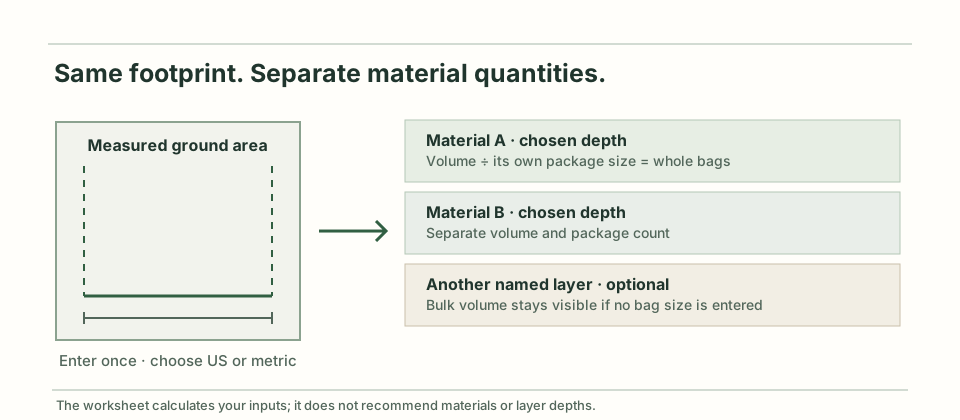
How the layer estimate works
Each row uses the same measured footprint and its own depth. For US inputs, cubic feet = square feet × depth in inches ÷ 12. For metric inputs, cubic metres = square metres × depth in centimetres ÷ 100. The calculator converts each row independently and rounds only that row's bag count up to a whole package.
Enter a bag volume from the package label when you want a bag count. Leave it blank to use the volume as a bulk-order planning figure. The combined volume is a reference total; it does not mean unlike materials can be substituted for one another.
Worked example from the editable inputs
For 200 sq ft with a user-entered 4-inch compost layer, the volume is 200 × 4 ÷ 12 = 66.67 cu ft, or 2.47 cu yd. With a 2 cu ft package, the row rounds up to 34 bags. A separate 3-inch layer over the same area is 50 cu ft, or 1.85 cu yd, and 25 two-cubic-foot bags. The depths and package size are example inputs, not recommendations.
Keep material placement and quantity separate
Oregon State University Extension distinguishes sheet mulching from lasagna-style composting and describes different ways materials can be layered. Its guidance does not create one universal layer recipe. This calculator only performs quantity arithmetic for depths you enter; it does not determine ingredients, order, depth, material suitability or when a bed is ready to plant.
For cardboard placement and overlap, use the sheet mulch cardboard calculator. For a single material across measured areas, use the soil and compost calculator or return to the mulch calculator.
Calculation method: Iowa State University Extension's measured-area and depth method. Sheet-mulching context: Oregon State University Extension.
Layer quantity questions
Does this page tell me which materials or depths to use?
No. Enter the materials and depths from your own plan. The calculator does not suggest a recipe, depth, planting date or soil amendment.
Can I use different bag sizes for each layer?
Yes. Enter the package volume shown for each material. Bag counts are rounded up separately, so a compost bag count is never added to a mulch bag count as if they were the same product.
Can I use bulk material instead of bags?
Leave that layer's package-volume field blank. The calculator still shows its cubic-foot and cubic-yard quantities; confirm supplier minimums and delivery rules separately.
Does the cardboard layer add to the area being covered?
No. Measure the ground footprint once. Cardboard overlap affects how many sheets cover that footprint, not the area used for each material-volume calculation. Use the linked cardboard calculator for sheet placement.