Garden planning guide
Prepare an AI garden design brief
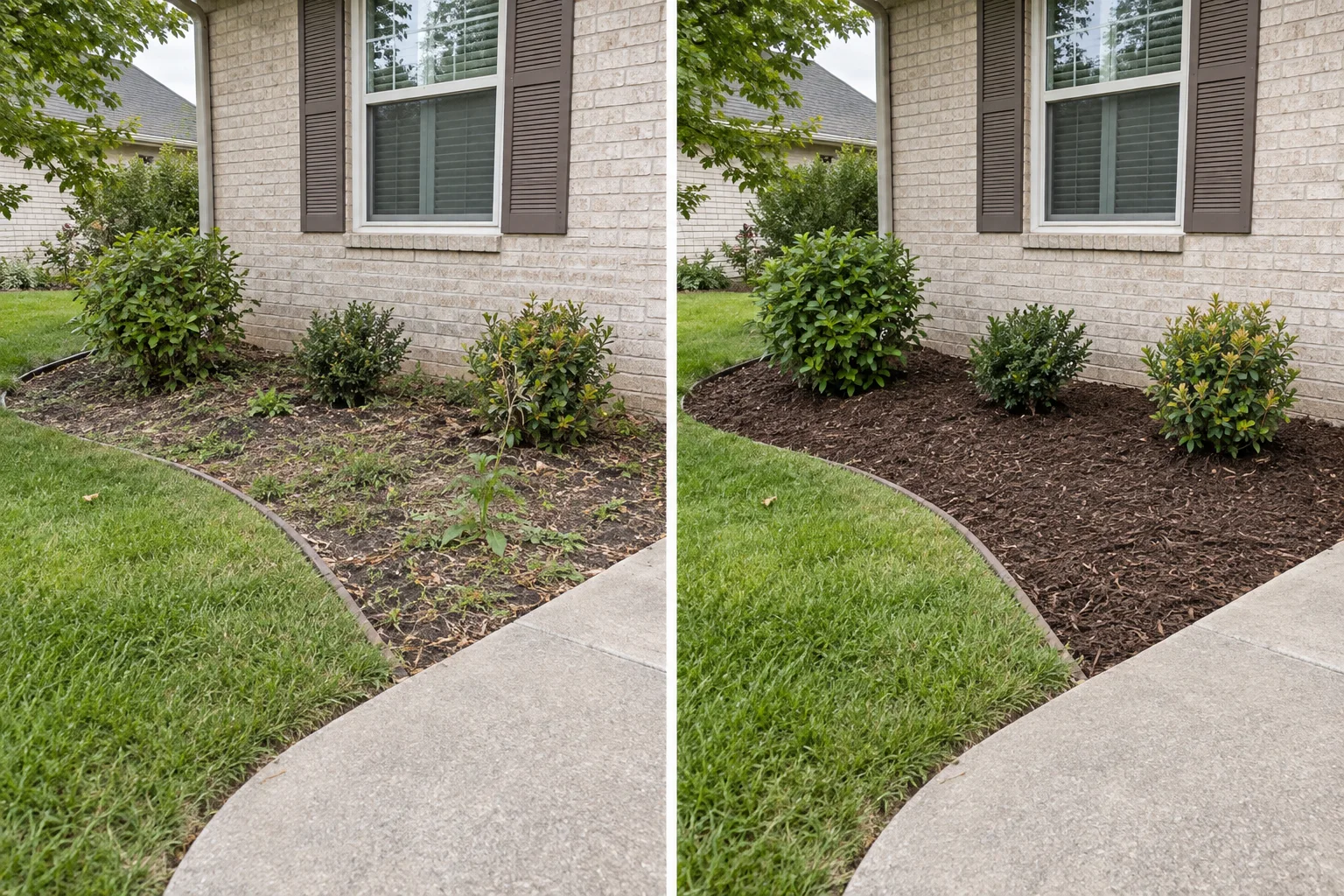
Start with what you want to change: a visual garden concept, a measured material order, or a plan for the crew. A photo helps communicate the look; measured areas determine the quantity.
Choose the output you need
A material order
Measure each bed, compare bags and bulk including delivery, then print or share a material list.
A visual garden concept
Prepare photos and a brief for an image-editing tool. Review style and layout before estimating quantities from measurements.
A job plan
Record the supplier, dates, crew and installation checklist for a measured landscaping job.
What to include with a garden photo
- Use a clear photo and say which bed or border you want to change.
- List what must stay: buildings, paths, trees, access and property boundaries.
- Describe the desired material, color and style. Add your location and growing conditions only when asking for planting ideas.
- Give any measured dimensions as separate facts. A photo alone does not establish area or depth.
- Ask the image tool for a concept preview from the same viewpoint. Keep proposed changes visually distinct from existing features.
In the calculator, open Use this estimate with an AI assistant or image tool after measuring, then choose Copy visual brief. Paste it into the image tool that accepts your photo.
What to put in the brief
- Project type: garden beds, greenhouse, small farm, irrigation zone, or sensor station.
- Measured dimensions, units, crop or material, target depth, climate, power, and connectivity.
- What must remain manual: emergency stop, override switch, safe operating limits, and inspection steps.
- What is unknown. Tell the model to ask for missing inputs instead of filling them in.
Use the right model for each output
Text models
Explain measurements, compare options, turn notes into a checklist, and identify missing assumptions.
Coding models
Draft ESP32, Raspberry Pi, web, or automation code from a reviewed interface and a clear safety boundary.
Image models
Create a labeled, not-to-scale bed layout, wiring concept, sensor placement sketch, or visual installation brief.
For a larger greenhouse or farm project
- Intake: one structured form for measurements, devices, power, budget, and location.
- Plan: produce a bill of materials, data flow, threshold table, alert channels, and manual override checklist.
- Visualize: export a model-neutral image brief with labels and a not-to-scale warning.
- Verify: keep generated code and diagrams in draft status until a person checks wiring, voltage, weather exposure, and local rules.
- Operate: only after review, connect readings and alerts to the farmer's chosen dashboard or messaging channel.
How CoverCalc Pro fits today
The current calculator handles the measured mulch and bed quantity layer. It can copy a text-model prompt for quantity checking and a visual brief for a labeled project diagram. The same input/output contract can later support greenhouse and farm modules without tying the product to one model vendor.
Open the calculator Open the AI prompt workflow
AI garden and farm planning FAQ
Can one workflow use more than one AI provider?
Yes. Keep the input brief and output schema stable, then choose a text, coding, or image model for each step.
Can an image model design a real greenhouse control system?
It can create a concept diagram. Treat it as a communication aid and verify every physical connection, limit, and safety control independently.
Does this page sell Hiroki Tomiyasu's system?
No. It describes a general workflow inspired by public smart-farming examples. It does not reproduce or claim ownership of another farmer's project.