Mulch calculator / Mulch weight
Mulch weight · bulk orders
How much does a yard of mulch weigh?
There is no fixed weight. Two suppliers cite 400–800 lb/yd³ for dry mulch; one warns that mulch can exceed 1,000 lb/yd³ after rain. EPA’s broad mulch/compost reference is about 800 lb/yd³. Ask your supplier for the current figure for your material.
Fast estimate: order weight = cubic yards × pounds per cubic yard. For 1.5 yd³ at the broad 800 lb/yd³ reference, the arithmetic estimate is 1,200 lb. Replace that reference with your supplier's current figure when available.
What the published numbers mean
EPA's broad planning value
The EPA methodology lists 0.4 short ton per cubic yard as an approximate density for the combined “mulch/compost” category. It says the value is generally consistent with purchased bagged mulch and uses the table to convert known volume to mass for material accounting. At 2,000 lb per short ton, that is about 800 lb per cubic yard. It is not a specification for a particular order.
Dry mulch supplier ranges
Two landscape-supplier references describe dry mulch at roughly 400 to 800 lb per cubic yard. The pages do not establish a national standard or guarantee for another supplier's product.
Wet material can be heavier
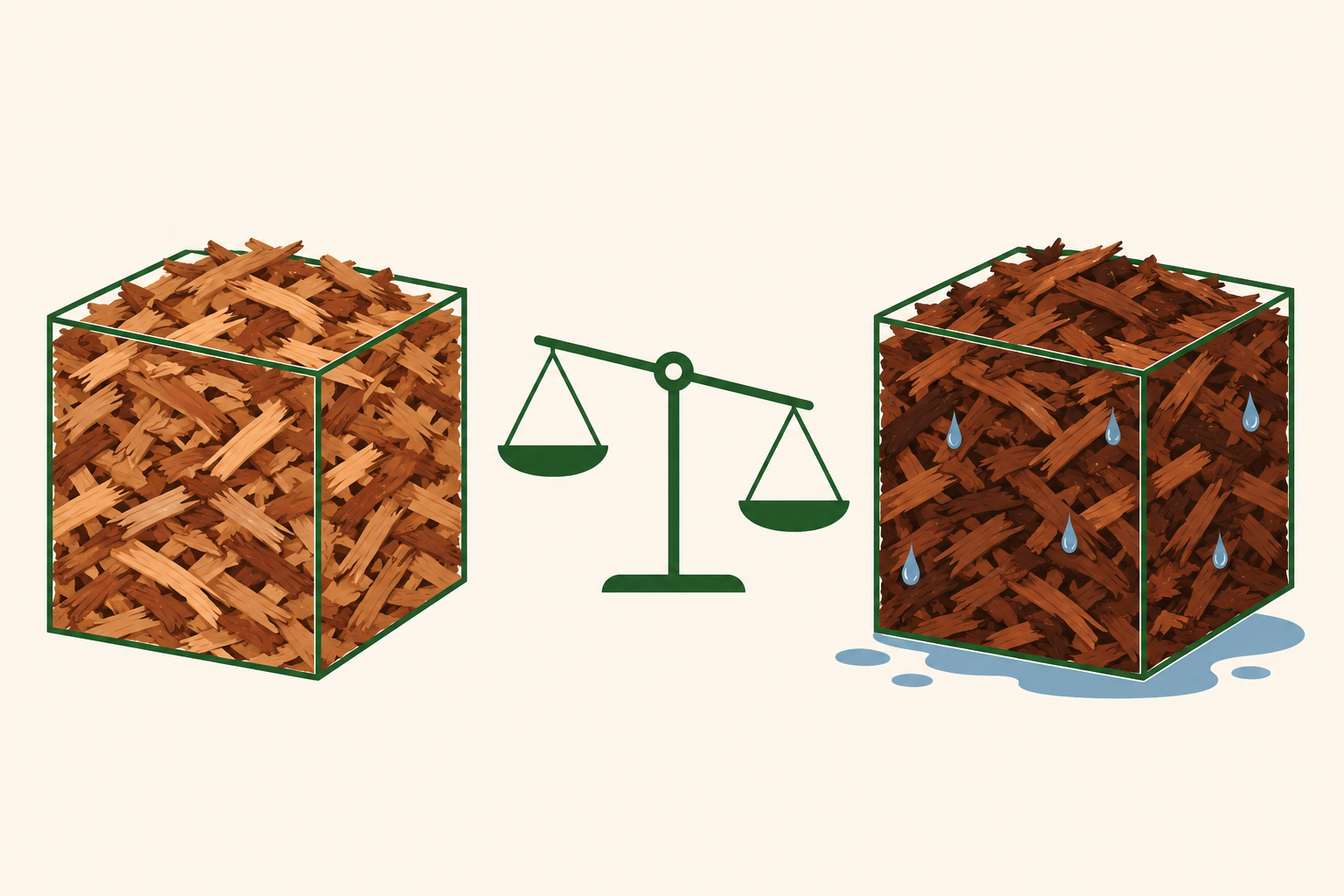
One supplier guide says mulch can exceed 1,000 lb per cubic yard after rain. That is a source-specific warning, not a fixed wet-weight multiplier.
Why a cubic yard has no single weight
A cubic yard measures space. NIST defines it as 27 cubic feet; the unit does not state what material fills that space or how much water it holds.
Mulch type and moisture affect weight. A rough reference can help with early planning, but it cannot replace the current number for the exact order.
Estimate a quoted order
Weight estimate in pounds = cubic yards × supplier pounds per cubic yard
Example: 1.5 yd³ × 800 lb/yd³ = 1,200 lb. The arithmetic is exact for the two entered numbers; the estimate is only as current as the density figure.
- Ask the supplier for the current weight or density for the material and condition being delivered or collected.
- Check whether the quote is per cubic yard, cubic foot, or another unit before multiplying.
- Use the actual vehicle or trailer ratings and loading instructions. A weight estimate does not verify a safe load.
Have a supplier weight per cubic yard? Use the mulch load calculator with your quoted volume, remaining payload, and usable load space. Buying bags instead? The bag weight calculator uses the exact product label or a full matching bag on a scale.
Sources
- U.S. EPA, Methodology for Understanding and Reducing a Project's Environmental Footprint — February 2012, Table 3.3. Approximate density for the combined mulch/compost category and short-ton definition.
- NIST Handbook 44, 2026, Appendix C — 27 cubic feet per cubic yard.
- Best Bark Mulch: How Much Does a Yard of Mulch Weigh? — supplier-published dry and wet reference ranges; last updated April 23, 2026.
- Mulch Mound: Bulk Mulch, Soil & Stone Delivery FAQs — supplier FAQ gives a rough dry range and notes that wet mulch is heavier; publication date not stated.
Sources checked November 3, 2026. EPA and supplier figures are planning references with different scopes. Ask the supplier for the current weight of the exact order.
Mulch weight questions
How much does a yard of mulch weigh?
There is no single product weight. Two supplier references describe dry mulch at roughly 400 to 800 lb per cubic yard; wet mulch can be heavier. EPA's approximate combined mulch and compost category works out to about 800 lb per cubic yard. Ask your supplier for the current weight or density of the specific material.
Does every cubic yard weigh 800 lb?
No. The 800 lb figure comes from EPA's general 0.4 short-ton-per-cubic-yard reference for combined mulch and compost. It is not a measurement of your product, moisture, or delivery.
How do I estimate the weight of an order?
Multiply cubic yards by the current pounds-per-cubic-yard figure supplied for that material and condition. For example, 1.5 cubic yards at 800 lb per cubic yard gives an arithmetic estimate of 1,200 lb. The example is not a vehicle-load clearance.
Can I use these estimates to clear a pickup load?
No. Use the supplier's current load weight and the rating and loading instructions for your own vehicle or trailer. A volume-to-weight estimate does not check payload, axle, towing, tongue-weight, load-distribution, or securement limits.