Same measure
Confirm the measured area and the depth used to estimate material. This tool does not choose either value.
Mulch calculator Compare installation bids
One measured job · up to three written bids
Compare the same bed, quoted volume, written total and work scope side by side. Unclear stays unclear; no contractor is ranked.
YOUR INPUTS · LOCAL CALCULATION
Enter the measured area, your chosen depth, then at least two written bids.
This worksheet reports entered arithmetic and terms. It does not decide whether a bid is fair, whether a task is needed, or which contractor to choose.
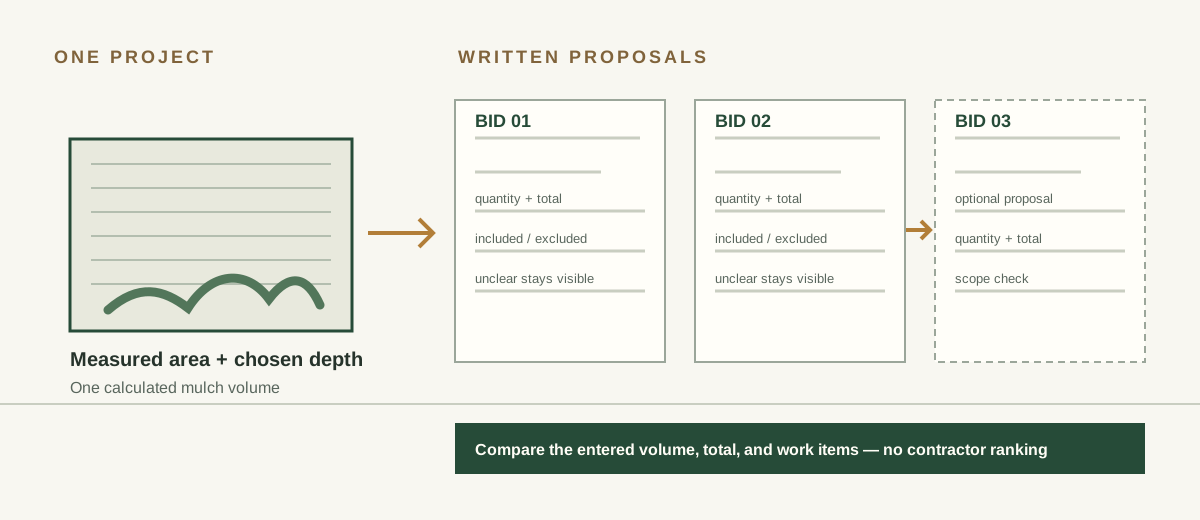
The worksheet starts from one area and one depth you choose, then places up to three written proposals beside that same project. For each completed bid it converts the stated cubic yards to cubic feet and shows whether that quantity is below, equal to, or above the calculated volume. The scope matrix makes written differences visible without silently filling in missing terms.
The area-times-depth method and cubic-feet-to-cubic-yards conversion follow Iowa State University Extension’s mulch quantity guide. The worksheet converts inches to feet by dividing by 12 and uses 27 cubic feet per cubic yard. Formula checked October 7, 2026.
Results reflect only the measurements and proposal terms you type. They do not add a waste allowance, recommend a mulch depth, verify a proposal, add taxes, assess local market rates, or determine whether preparation, edging, removal, or cleanup is suitable for the site.
A total alone may not describe the same work. One proposal may include mulch and spreading; another may list only labor or leave disposal unresolved. Mark a task as included or excluded only when the proposal says so. If it is not explicit, leave it at “Not clear yet” and ask for the term in writing.
Confirm the measured area and the depth used to estimate material. This tool does not choose either value.
Compare the quoted cubic yards with the worksheet’s theoretical volume. Site conditions and ordering allowances may differ.
Check material, delivery, spreading, preparation, old-mulch removal, and cleanup separately.
Different tax bases, currencies, products, access conditions, or proposal dates can make totals non-comparable. The calculator does not normalize those differences. Use the written proposals and ask each contractor what is included before making a decision.
The editable example uses illustrative proposal entries, not real contractor quotes. For 270 sq ft at a chosen depth of 2 in, the worksheet calculates 45 cu ft, or about 1.67 yd³.
1.67 yd³ converts to 45.09 cu ft, about 0.09 cu ft above the calculated volume. The entered total is $620 USD. Material, delivery, spreading, and cleanup are marked included; preparation is unclear and old-mulch removal is excluded.
2 yd³ converts to 54 cu ft, 9 cu ft above the calculated volume. The entered total is $750 USD. Material, spreading, and preparation are marked included; delivery, old-mulch removal, and cleanup are unclear.
The quantities do not establish whether either proposal includes an ordering allowance or whether one price is fair. Ask for the unclear written scope items and compare totals only on the same currency and tax basis.
If one proposal lists less mulch than the area-and-depth calculation, the result shows a quantity shortfall to clarify. If another lists more, the result shows the surplus against that same theoretical volume. A scope difference can identify a follow-up question, such as whether delivery or cleanup is part of the written total. None of those results prove that a contractor is overcharging or that a particular task should be added.
The comparison is useful only when the entered figures come from the current proposals and use a shared currency and tax basis. It does not inspect files, contact contractors, check licenses or insurance, or recommend a winner.
Required cubic feet = measured square feet × chosen depth in inches ÷ 12. Cubic yards = cubic feet ÷ 27. The depth is your input; this calculator does not recommend one or add an overage.
No. It organizes the totals, quantities, and work items you enter. It does not rank contractors, estimate local market prices, verify a bid, or judge workmanship, insurance, licensing, or price fairness.
Leave that item marked unclear and ask the contractor to state it in writing. A blank or unclear scope item is not treated as included or excluded.
Use bids with the same currency and tax basis for a meaningful side-by-side total. The calculator does not convert currency, estimate tax, or normalize different terms.
No. It compares the quoted cubic yards with area multiplied by the depth you enter. It does not add an allowance for waste, uneven ground, settling, delivery loss, or site conditions.