Mulch calculator Pallet orders
Mulch Pallet Calculator
Compare a full-pallet order with full pallets plus loose bags. Use your supplier's pack count.
Supplier examples 70 or 80 bags per 2 cu ft pallet
How many bags of mulch are on a pallet?
These two supplier listings show 70 or 80 bags for their 2 cu ft products—not a count for every brand. Check your exact product before using a pack below.
- Michigan Bark · Nature’s Mate2 cu ft per bag · 80 bags per pallet · pallet-only sales
- Mulch Pros · Brown Mulch2 cu ft per bag · 70 bags per pallet · bag and pallet listings
Checked October 17, 2026. Buttons fill only bag volume and bags per pallet; your project quantity and quotes stay unchanged. Neither count is a weight or load rating.
Full-pallet order
— pallets
— extra bagsPrice not enteredIf loose bags are sold
— pallets + — bags
Uses exactly the required whole bagsPrice not enteredEnter your needed bags and the supplier's pack count.
Bag count is not a load rating. Check delivery rules, pallet handling and your vehicle's actual capacity before pickup.
Compare your quoted prices
Optional. Use the same currency in both fields. Delivery, tax and unloading are not included.Check whether your supplier sells single bags alongside full pallets. The mixed route is only an option if it does.
Count bags first, then choose the sale unit
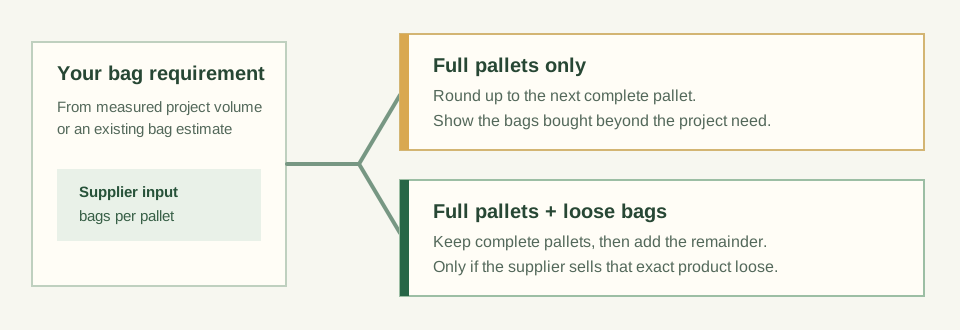
If you enter project volume, the calculator divides cubic feet by the volume printed on one bag and rounds up to a whole bag. It then uses the supplier's bags-per-pallet count. A full-pallet-only order rounds the bag requirement up to the next complete pallet; a mixed order uses complete pallets plus the remaining individual bags.
Required bags = ceiling(project cu ft ÷ cu ft per bag)
Full-pallet order = ceiling(required bags ÷ bags per pallet)
Mixed order = full pallets + remaining loose bags
Do not use a count from another product. The calculator does not supply default pallet quantities, prices, delivery terms, material weight or a vehicle rating.
Check the supplier's exact listing
Product listings can show different pallet pack counts and different sale rules. For example, the public Michigan Bark bagged-mulch listing describes pallet-only sales, while the Mulch Pros price list shows both per-bag and per-pallet sale units for some products. They are examples of supplier-specific rules, not default values for your order.
Confirm that loose bags and full pallets are the same product and bag volume before comparing the two routes. If a pallet order has a delivery minimum or deposit, add it to the quote separately. Need pickup-trip arithmetic for a bulk order? Use the mulch load calculator with your own weight and capacity figures.
Mulch pallet questions
How many bags of mulch are on a pallet?
There is no universal count. Enter the count on your supplier's listing for the exact product; a bag volume alone does not tell you the pallet pack count.
What if the supplier sells only full pallets?
Use the whole-pallet result. It rounds up to the next full pallet and shows the bags left over; it does not assume loose bags are available.
Can I mix full pallets and loose bags?
The mixed result uses as many full pallets as possible, then the remaining individual bags. Use it only if your supplier sells the same product by the bag and accepts that purchase mix.
Does the price include delivery?
No. Optional prices include only the entered pallet and individual-bag quotes. Add delivery, tax, deposits and unloading charges outside this calculator before ordering.
Need the bag count first?
Measure the project with the mulch calculator, or convert the coverage printed on a bag with the bag-label calculator. Bring the rounded whole-bag result back here.
Quoting a customer job?
Open the installation cost calculator to enter your local material, delivery and labor figures. This pallet worksheet does not transfer your inputs.