Mulch calculator / Refresh by bed
Mulch refresh, bed by bed.
What is already there? Measure each bed separately. This worksheet calculates the missing layer in each one and combines only the new material into a single order.
Purchase ticket
Your combined top-up
Enter each bed’s net area, existing depth and target depth to get one combined order.
- Exact new material
- —
- Exact bulk volume
- —
- Entered bulk increment
- —
Bag count rounds once after adding the beds. Bulk increments are optional. Neither figure includes an extra allowance, price or delivery.
Walk the beds
Use the net area that will receive mulch. A depth of zero is valid; a blank measurement is not.
Divide this bed into equal-area sections. Enter a representative measured depth from each section, separated by commas or new lines. Unequal areas? Add them as separate bed rows instead. The estimate tops up thin sections; it does not move mulch from deeper ones.
Where the total comes from
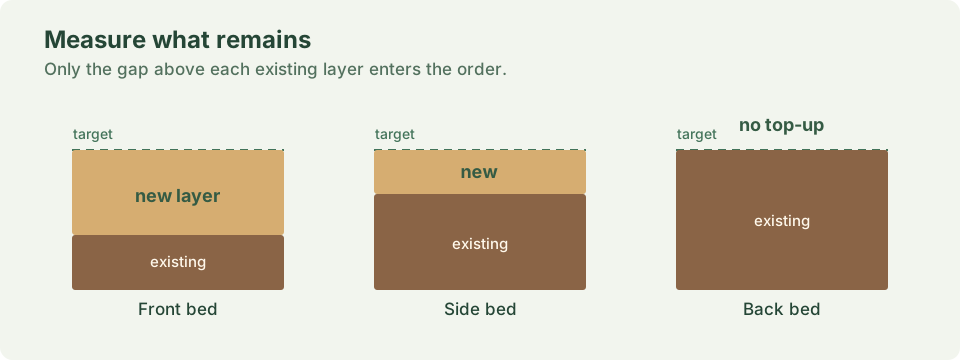
Each bed shows its own depth difference. A bed already at or above the entered target contributes zero new material.
Measure the layer, not the calendar
An annual refresh is not an automatic purchase. An Ask Extension response from the University of Maryland says the amount and frequency of topping up depend on what remains in the bed; some years may need no addition. Inspect the material before treating it as usable depth.
For each bed, added depth = max(target depth − measured existing depth, 0). Multiply its net area in square feet by added inches divided by 12 to get cubic feet. Add the unrounded cubic feet across beds, divide by 27 for cubic yards, or divide by the bag's printed cubic-foot volume and round up once. Iowa State University Extension's mulch-measurement guide explains the area, depth, bag and bulk volume conversions.
This calculation assumes the listed beds can share one product. It does not decide whether a mulch type suits a planting, whether old material should be removed, or whether a supplier has enough stock. Use the order-by-zone worksheet for different products. For one bed only, the single-bed top-up calculator also supports metric units.
Thin patches should not disappear in an average
If the remaining layer varies, select “Use several depth readings” for that bed. Measure representative depths in equal-area sections, then enter every reading. The worksheet finds each section's gap first and averages only the positive gaps: mean addition = sum(max(target − each reading, 0)) ÷ number of readings. This is an estimate based on the sections you measured, not a claim that every part of the bed has that depth. Top up the thin sections rather than spreading that average uniformly.
Oregon State University Extension recommends checking the existing layer before reapplying wood or bark mulch. University of Florida research on mulch settling shows that materials can settle differently. This worksheet uses present measurements, not a fixed annual loss percentage. Choose a suitable target for your planting; this tool does not choose it for you.
Why not just average the existing depths?
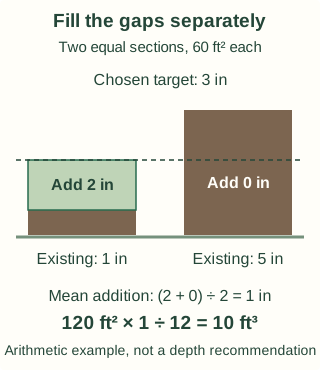
For this illustration, the existing depths average 3 inches, but one half is still thin. The gaps are 2 and 0 inches, so the mean addition is 1 inch. For 120 ft², that is 10 ft³, or 5 bags if each bag holds 2 ft³. These are illustrative inputs, not a depth or product recommendation. Use separate bed rows when the section areas differ.
Already chose a suitable liquid mulch colorant? The mulch dye batch planner scales the two quantities on your label into water batches. It does not assess whether recoloring is needed or replaces a measured top-up.
Refresh questions
Do I need to add mulch every year?
Not automatically. Measure the layer that remains and add material only where the site and chosen target call for it. The calculator uses your measurements, not an annual replacement schedule.
Should I round bags for each bed separately?
Not when the beds share one product order. Add their unrounded top-up volumes, divide by the cubic feet printed on the bag, and round up once for the combined order.
What if a bed is already deeper than its target?
Its calculated addition is zero. This does not advise removal or certify that the old layer is usable. Inspect the mulch, plant crowns, trunks and drainage before deciding what to do.
Should I remove old mulch before adding more?
Not always. Measure what remains and inspect its condition before deciding. The University of Maryland Extension says organic mulch may be gently worked into the bed or removed and reused elsewhere as it decomposes; its general guidance is to keep organic mulch at or below 3 inches. Oregon State University Extension also advises checking current depth and the specific material before reapplying. These guidelines vary by material and planting. This calculator cannot inspect the bed or choose a target; it calculates only from the depths you enter.
If you decide some mulch needs to be lifted before topping up, use the mulch removal cost calculator to record an entered quote and measured in-place volume separately from your new-material order.